
Smartphones are contraceptives
Or maybe that should be contracoitals? Clever analysis of the iPhone rollout implicates phones in falling birth rates

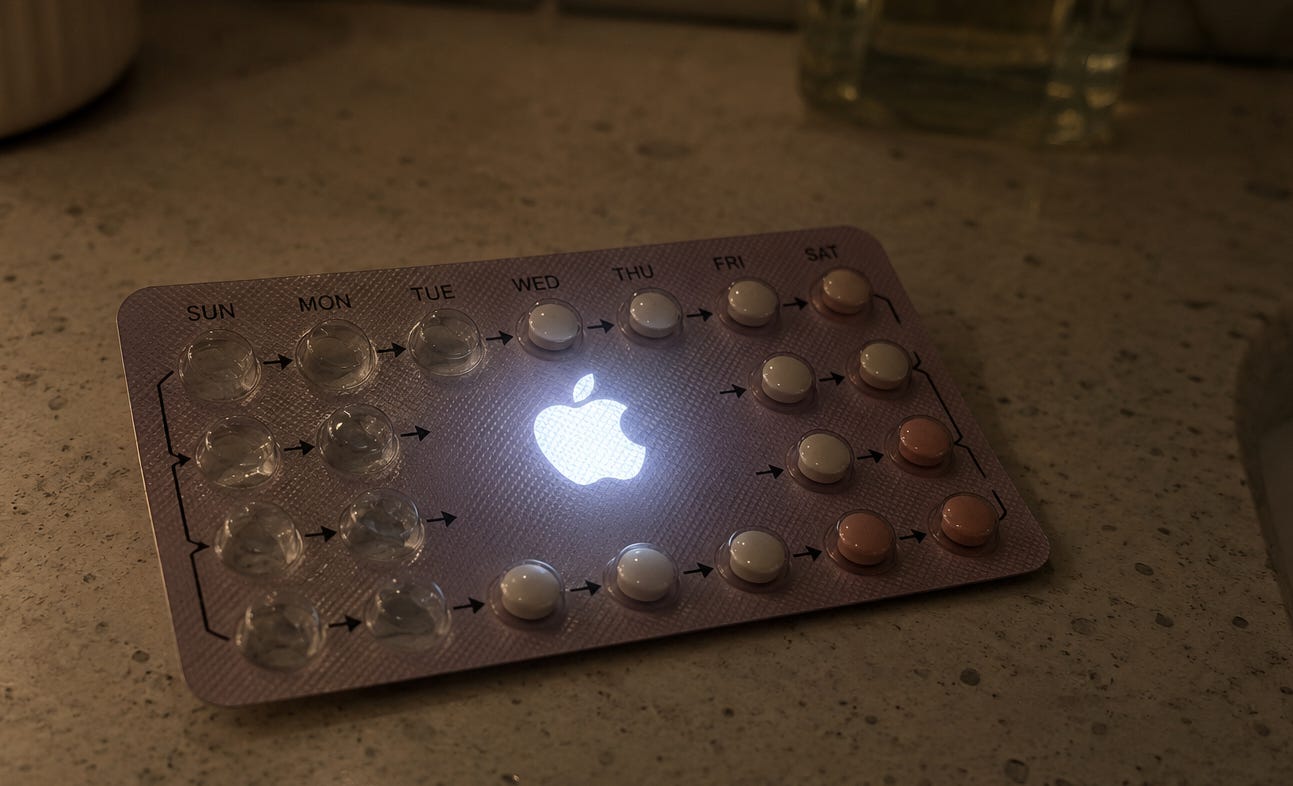
Birth rates are falling in much of the world. They have been for decades, but the decline has been particularly striking in industrialised nations in the last two decades. The U.S.A., for example, has experienced a decline of 22 per cent since 2007. This is no mere blip, and it defies the usual explanations of economic and demographic drivers. What’s going on?
Two working papers identify smartphones as the culprit. In “The Collapse of Teen Fertility in the Digital Era”, University of Cincinnati economists Nathan Hudson and Hernan J. Moscoso Boedo show that, across 128 countries, 2007 was a watershed year for teen fertility. The timing is no coincidence: the iPhone launched in mid-2007, and smartphones have become ever more popular since then. They argue…
Smartphones changed how teens spend time with each other, and that this change in turn drove the collapse in teen fertility. Once enough teens are on the phone, being on the phone is where the peer network is; in-person time falls sharply, and with it the unstructured contact in which most unintended teen conceptions occur.
Sounds credible, and Hudson and Mosco Boedo present plenty of secondary analysis indicating that the 2007 inflection point is likely due to the smartphone rather than some other coincident event. Another working paper provides additional evidence from a natural experiment, showing that the spread of smartphones might be responsible for much of the decline. In “Is the iPhone Birth Control? Causal Evidence from AT&T’s 2007–2011 Carrier Monopoly”, economists Caitlin K. Myers and Ezekiel Hooper exploited an interesting quirk about the iPhone rollout in the U.S.A. to test for a link between smartphones and fertility rates.
When the iPhone first became available, in June 2007, in the U.S. it was only sold on the AT&T network. Myers and Hooper recognised that good data existed on the geography of AT&T’s mobile broadband coverage. By comparing areas with good AT&T coverage with those with poorer coverage, and relating those differences to differences in fertility rates, they were able to estimate the iPhone’s effect on fertility.
They found that, over 2007-11, 33 to 52 per cent of the decline in fertility among women aged 15-44 was explained by variation in iPhone adoption. Note that fertility was already declining in teens and young adults, but the iPhone seems to have made that decline much steeper. In women over 30, birth rates had been rising due to delayed child-bearing, but the iPhone rollout slowed this rise.
There’s nothing special about Apple’s smartphone technology that suppresses birth rates. It is merely convenient that the first true smartphone to be adopted at scale was also distributed by an AT&T monopoly for the first few years, allowing a crisp estimate of the causal effects on fertility. The main implication is that smartphone use in general is likely a massive player in the ongoing decline in fertility.
How do smartphones have such effects? We aren’t talking the radiation from the phone in your pocket frying your sperm or eggs, here. The culprits are likely to be far more mundane.
I wrote about this in Artificial Intimacy: time spent on smartphones, especially on social media, is time not spent tending offline relationships with humans. Especially those relationships that involve falling in love, having sex, and conceiving offspring.
The teens and young adults who came of age over the last two decades are far less likely to drink, experiment with drugs, get a driver’s license, or go on dates than were members of older cohorts. Some of that is for the best: accidents causing traumatic brain injury, homicides, and drug overdoses are generally down for these younger cohorts. Some of the differences are for the worse, with social media rollout tied to rising youth mood disorders and self-harm.
The sex-and-pregnancy effects have complex social and economic consequences. Despite much nostalgia among Gen-Xers like me for the 1980’s and 90’s, none of us would want a return to the catastrophic teen pregnancy rates of that era. But we, especially we who are parents of teens and young adults, do worry about the missing, messy, sometimes magical part that comes before pregnancy. Young adults seem altogether less involved in dating and romantic relationships, for all the joy and character-building heartbreak they bring.
Okay, so maybe Def Leppard wasn’t the unequivocal high-water mark of popular culture. But it was pretty good at the time.
What concerns me most is that smartphones and social media were mere test balloons in the rollout of artificial intimacy. AI algorithms that optimise for engagement and time spent on the platform have proved devastating enough on human attention and civil discourse. Frictionless communication on messaging apps has altered how young people spend their time and their limited social attention. But conversational technologies, powered by Large Language Models, are already soaking up not only time and social attention, but those parts of users’ social capacities that are usually exercised by friendship, intimacy-building and falling in love.
I predict that 2024, the first full year after ChatGPT opened the LLM era, could define a new inflection toward even lower engagement in human-human sex, relationships and reproduction.
Technology alters a finely tuned system. iPhones reduce time spent with humans. This reduces birthrate, which will reduce the labor pool available, which will increase the rate of robot adoption. It's hard to say where it all leads. But it seems to me a mature society is one that maps out deliberately all the externalities, all the unforeseen costs, of a newly-released technology. With AI this is starting to sound not only prudent, but necessary to the survival of the human race.