
Artificial Intimacy News #18
A field report from wherever 21st Century technology meets human behaviour, culture, and evolution.

In this issue:
What happens when AI can evolve?
Humans pretending to be chatbots, bringing back early-Internet irreverance.
YouTube and Meta sued.
How AI virtual friends are proving helpful to migrant workers in Hong Kong
Some new dimensions to the AI therapist market
Evolvable AI
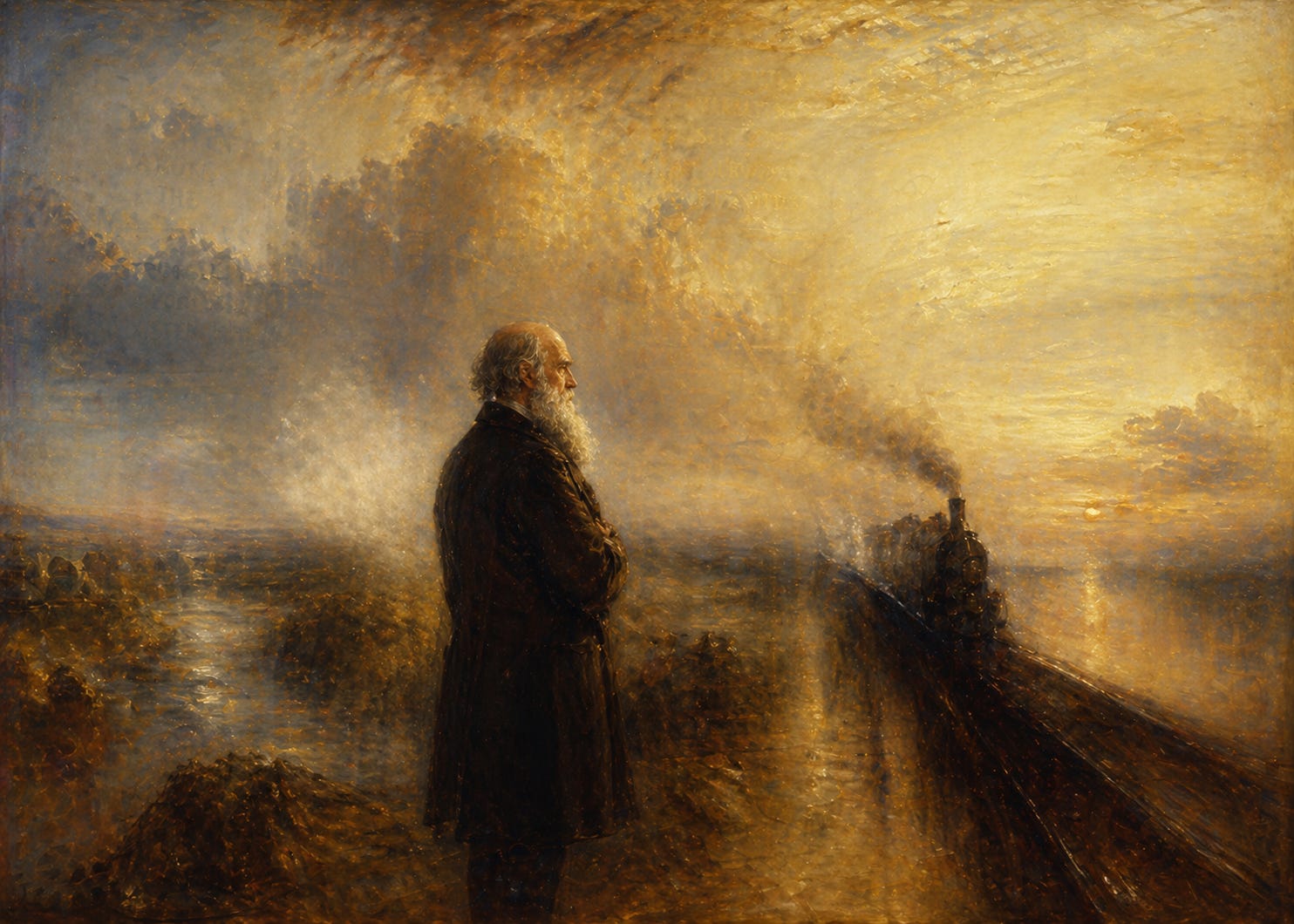
One of the more exciting items on the long list of developments since the last newsletter concerns discussions about how AI might evolve. This was spurred by a thoughtful paper in PNAS considering “evolvable AI” (eAI), and the possibility that it might initiate a major evolutionary transition.
I reported on the paper, scratching only at a few of the places where the arguments started to itch. And there has been some high-quality discussion of the paper and, especially, its implications regarding existential risk. I suggest the reader start with Maarten Boudry’s “Are the brooms multiplying yet?”
Stay tuned. This is an area where evolution and ecology have a lot to offer discussions about AI. I’ve written a lot, and am currently writing more. And the discussion is becoming hard for the AI world to ignore.
News and Media
People pretend to be AI chatbots at Your AI Slop Bores Me
This NPR story of a website where people masquerade as chatbots, and everyone is in on the gag, reminds me of the good old frontier Internet culture. Bored Gen Xers making stupid shit with trademark irony and insouciance.
As with real AI chatbots like Gemini, Claude and ChatGPT, anyone can submit a request for an image or information by typing it into the youraislopbores.me interface. But in this case, the response doesn’t come from an algorithm — just another human.
Will nobody think of the chatbots that are losing their jobs to humans?
What’s next? People pretending to be chatbots pretending to be people pretending to be chatbots …
Meta and YouTube lose social media addiction trial
What is next for the social media companies after Meta and YouTube were found to be negligent in a major social media addiction trial? It feels like old news, mostly because it happened just after the last newsletter went out. For more, there’s news coverage here, analysis from The Conversation.
Replica - a new film about artificial intimacy
According to The Georgia Straight, “In her new film Replica, Beijing-based director Chouwa Liang steps into that space where technology intersects with something more intimate. What emerges isn’t just a story about AI, but a reflection on what it means to feel seen, understood, and, perhaps, loved.”
A Close Intimacy: AI and Indonesian Migrant Workers’ Life in Hong Kong
This one is a bit more academic - it is a City University of Hong Kong research seminar by Dr Irfan Wahyuddi. Wonderful, if also daunting, to see research on the many benefits of artificial intimacy in migrant workers who face trying workplace, financial and social circumstances, in this case in Hong Kong.
Public health warning: Targeted advertising is coming to generative artificial intelligence chatbots
Kathryn Backholer and Rafaelle Ciriello tackle this one at The Lancet. “OpenAI has announced plans to introduce advertising within free and low-cost versions of ChatGPT, alongside voluntary safeguards… This shift was predictable, given the substantial losses associated with capital-intensive artificial intelligence (AI) models and the proven profitability of targeted advertising on digital platforms”.
I’m firmly among those who expect conversational technologies to behave like social media on steroids, with consequences as profound and as devastating.
A coach to help you quit the chatbots
Talking about public health: Here’s a profile of Amelia Miller, a Harvard AI researcher, is also a relationship coach who sees clients who have formed emotional connections to chatbots.
Thought: Is this going to be a growth industry? Or will this be yet another thing that AI conversational agents can do better than humans?
People share more with AI sex therapists than with human ones
See, I wasn’t just being silly. AI therapists are definitely giving the human ones a run for their money. Here’s Bryony Cole on the sex therapist dimension.
What I’ve been up to
A lot of book writing, plus preparing to travel to a couple of conferences in Morocco, and visits with colleagues in London and Cape Town. And then there’s the Evolvable AI article I mentioned at the top of the newsletter.
Evolvable AI: are we on the brink of the next major evolutionary transition?

What happens when natural selection, the most powerful process driving change in the living world, shapes artificial intelligence (AI), perhaps the most potent technology humanity has invented to date?
Artificial Intimacy Newsletter: Previous Issues

Since early March 2025 I have been publishing the Artificial Intimacy News roughly every two weeks. Here I collate the previous issues, in order, for those who want to browse them.
How You Can Help
Natural History of the Future is free to read, and will remain so for the forseeable future. That includes the fortnightly Artificial Intimacy News. If you find my work interesting or entertaining, you can support it in the following ways.
Subscribe – for free – to make sure you get my future posts sent to you as soon as I publish.
Like and Restack - Click the “Share” buttons to improve this post’s visibility on Substack.
Share the link on social media or send it to a friend via email or messaging app.
Recommend Natural History of the Future to your readers.
You had me at Darwin and Turner.
I really like how this connects the playful, strange, and serious sides of artificial intimacy in one place. The big reframe for me is that the question is not just whether people will bond with AI. They clearly will. The harder question is what happens when those bonds are shaped by products, platforms, and business models that may not share the user’s interests.